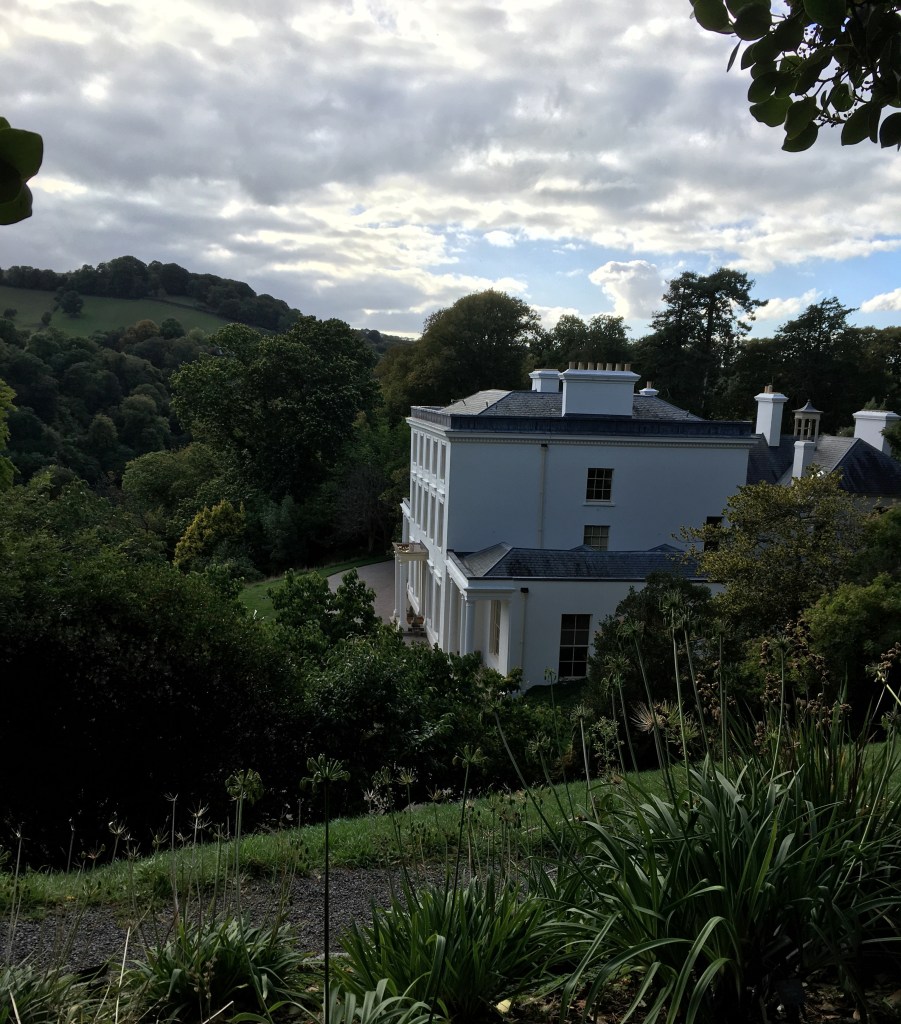
Many of the country house settings found in classic crime fiction are now the kind of stately homes you might find on a visit to a National Trust property. The connection between the two becomes ever stronger regarding the novel Dead Man’s Folly and Greenway House in Devon. Both form part of the extensive heritage left by one of the most famous crime writers, Agatha Christie.
Dead Man’s Folly, published in 1956, began life as a shorter text, ‘The Greenshore Folly’. Agatha Christie wrote it in 1954 with the intention of donating the rights to Churston Fetters Church to raise money for new stained glass windows. However, the story was difficult to sell as it was too long for a short story but not long enough for a novel. Never one for waste, Christie turned part of the text into a short story, ‘Greenshaw’s Folly’, featuring Miss Marple, which she gave to the church. She then produced a longer work which we now know as the Hercule Poirot novel Dead Man’s Folly. The ‘Greenshaw’ of the earlier incarnation may have provided a clue regarding the setting as she drew inspiration from her beloved holiday home Greenway House in Devon. Names were changed though. The river Dart became the river Hel, and Greenway House became Nasse House. Christie had drawn upon her Devon home in other novels – Five Little Pigs, Ordeal by Innocence and Towards Zero. However, it is in Dead Man’s Folly that the house and grounds are most clearly evoked.
Agatha Christie bought Greenway House in 1938 during what she described as her ‘plutocratic period.’ It was advertised in Country Life where it was described as “suitable for a first class hotel.” Lucy Worsley, in her biography Agatha Christie: A Very Elusive Woman, highlights how remarkable such a purchase was, as at this point in time most large country houses were being sold off, and not being bought as private residences. This is reflected in Dead Man’s Folly where the former lady of the manor Mrs Folliat, who now lives in the lodge by the front gate declares:
Nice to have Nasse lived in again. We were all so afraid it was going to be a hotel… One drives through the country and passes place after place with the board up “Guest House” or “Private Hotel”… All the houses one stayed in as a girl – or where one went to dances. Very sad. (Chapter 5, p.62)
Christie’s initial enjoyment of Greenway was short lived as when the Second World War began the house was commandeered by the Admiralty and not returned to her until February 1945. Her love for the house is clear from her own autobiographical writings, as well as the way it is evoked in her previously mentioned works of fiction.
Dead Man’s Folly begins with Hercule Poirot receiving a call for help from his good friend the famous crime writer, Ariadne Oliver. Mrs Oliver is staying at Nasse House in Devon, which is the home of Sir George and Lady Stubbs. She has been tasked with devising a Murder Hunt for their garden fete, but her intuition leads her to tell her old friend “But I think there’s something wrong.” (Chapter 1, p.11) There is a form of doubling occurring in the text as the grounds of Nasse House is the setting for a murder mystery style treasure hunt, and subsequently becomes the scene of an actual murder. Ariadne Oliver is indeed right, her plans are being manipulated.
I am not sure if it is because I am familiar with Greenway following my visit, and thus have firm images in mind, or whether Christie’s love of the house is coming through, but this text feels particularly evocative regarding location and sense of place. This begins with Hercule Poirot’s chauffeur driven arrival:
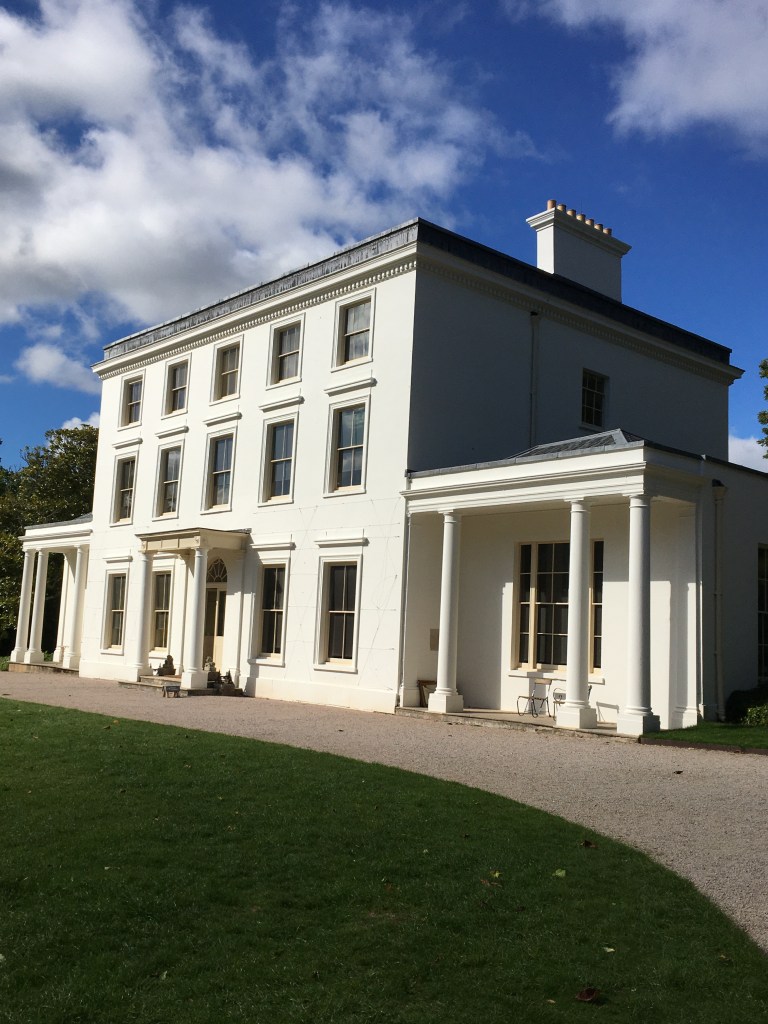
They went on, down a steep hill through woods, then through big iron gates, and along a drive, winding up finally in front of a big white Georgian house looking out over the river. (Chapter 1, p.8)
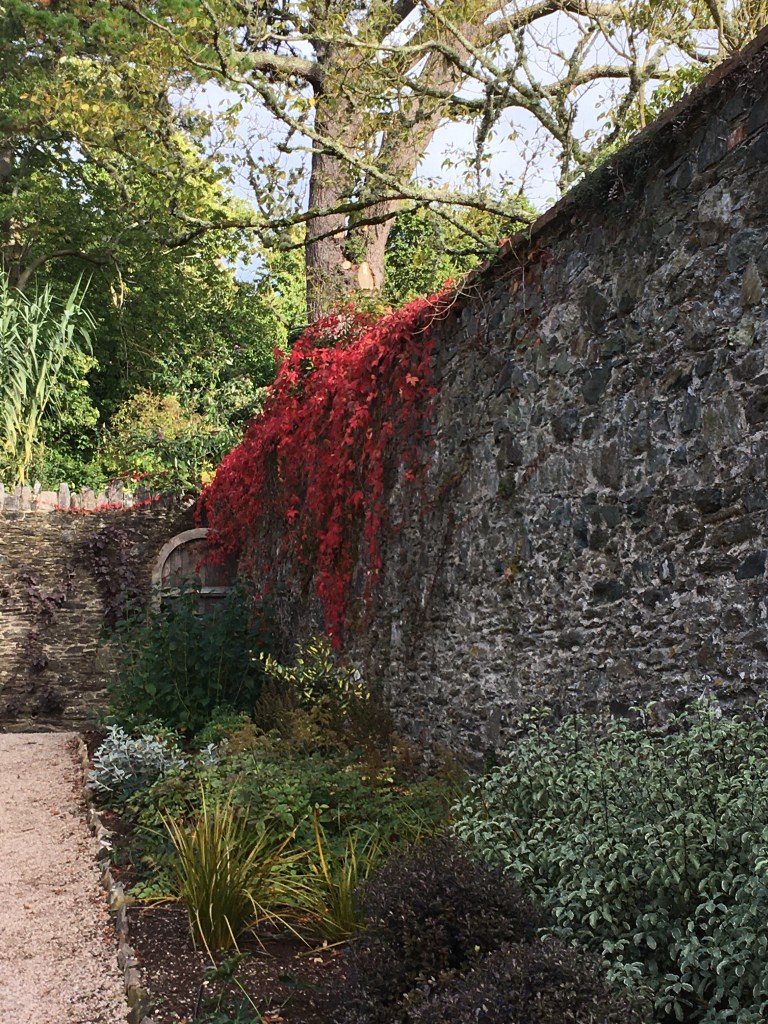
The grounds with its many interesting features and self-contained areas provides the perfect setting for a treasure hunt style murder mystery, as seen by Poirot’s attempts at navigating his way through the clues:
… Poirot went off murmuring to himself like an incantation: Tennis Court, Camelia Garden, The Folly, Upper Nursery Garden, Boathouse…
The event of the Summer Fete helps in providing the usual cast of suspects required in any classic murder mystery as Sir George and Lady Stubbs have a number of guests staying with them. In addition, the house next door has been converted into a Youth Hostel providing a few additional suspects in the guise of trespassers. Added to the mix, as well as a murder, there is a disappearance and an unexpected arrival of a long lost relative. Thus, there is plenty to keep the reader engaged, and some quality Christie plotting.
At this point, it is worth returning to Ariadne Oliver, a character who appears in several Christie novels and who the author admits is partly based on herself. Christie has been known to use this character in particular ways, sometimes to make comment on the process of writing. Indeed, she is already tired of her detective character Sven and regrets making him Finnish as she has never been to Finland and knows nothing about the country. There are echoes here of Christie’s creation of the Belgian Poirot! When attempting to explain the plot of her treasure hunt the brilliant Poirot blinks “in mute incomprehension.” (Chapter 4, p.38). She bemoans the need to explain her story as she prefers to write things down as verbally explaining her plots always ends in “the most frightful muddle.” (p.40) Poirot says nothing but privately reflects the “whole plot and action of the Murder Hunt seemed to be wrapped in impenetrable fog.” (p.41) Fortunately Christie’s plot, whilst requiring careful attention, is somewhat clearer.
It is interesting though, that a novel set in her home, also contains some further personal reflections. Ariadne Oliver is used to such effect during the treasure hunt where she encounters a competitor:
‘They say Mrs Ariadne Oliver is down here herself somewhere about. I’d like to get her autograph. You haven’t seen her about, have you?
‘No’, said Mrs Oliver firmly.
‘I’d like to meet her. Good yarns she writes.’ He lowered his voice. ‘But they say she drinks like a fish.’
He hurried off and Mrs Olive said indignantly: ‘Really! That’s most unfair when I only like lemonade.’ (Chapter 6, p.77)
This is based on an exchange Christie overheard between two women, whilst keeping her identity secret. They praised her writing but commented they had heard she drinks like a fish. Rather than being offended, she was mildly amused. Agatha Christie was T-total, and her drink of choice was cream.
Whilst she may have slightly altered the above anecdote, much of the detail related to the house and grounds remain, as does the history of the house as told by Mrs Folliat. Even Poirot’s bedroom has a basis in reality as he is led up “the staircase and along a passage to a big airy room looking out over the river.” (p.42) The bathroom opposite reflects the geography of the interior. Beyond the house there is the Gate Lodge, Ferry Cottage, the Tennis Court, the Battery (where he encounters Mrs Oliver on his arrival) and the Boathouse. The latter is carefully described:
A short steep slope led down to the door of the boathouse which was built out over the river, with a little wharf and a storage place for boats underneath. (Chapter 6, p.79)
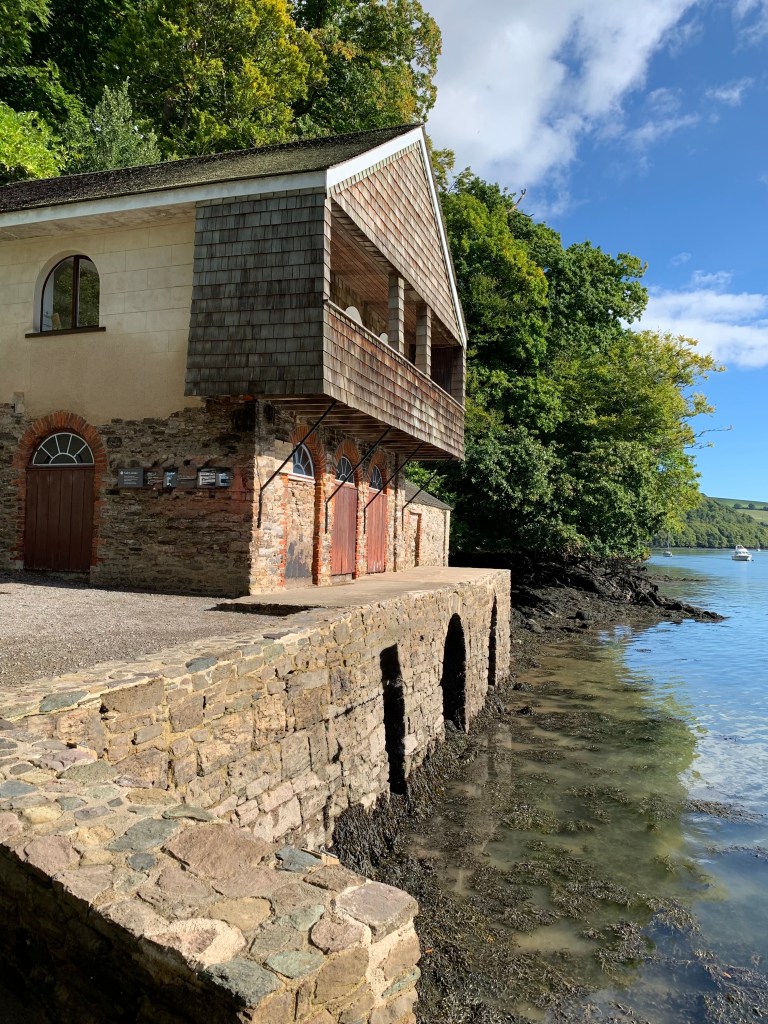
This location is particularly significant as it is the scene of the murder in Mrs Oliver’s plot and, as you might have guessed, becomes the scene of the real crime. The beauty of the backdrop provides an apposite contrast for brutality of the events. Even Poirot, who is not fond of “nature in the wild” finding it too untidy and unruly found the “beauty of Nasse House appealed to him in spite of himself.” (Chapter 16, p.194) The ITV 2012 adaptation of Dead Man’s Folly starring David Suchet was actually filmed at Greenway. It seems even more fitting that this was the final episode of Poirot to be filmed at such a significant location.

