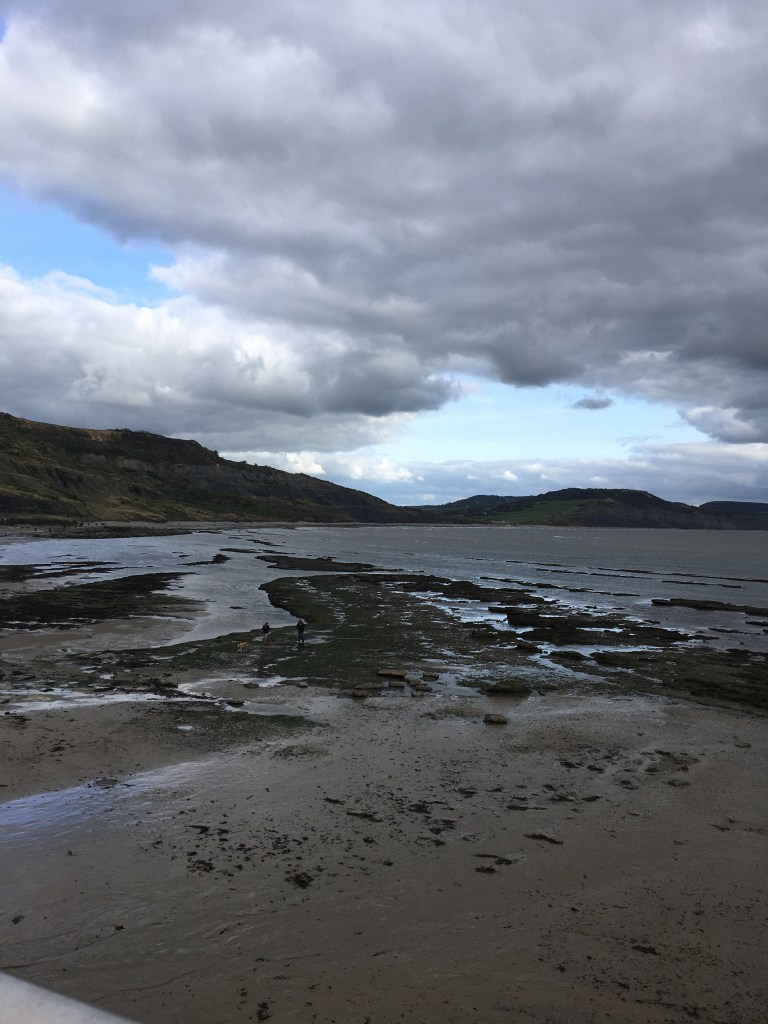
The Austen family visited Lyme Regis in the Autumn of 1803 and again in the summer of 1804. At the time of their visit, Lyme Regis was fast becoming a popular destination for middle class Georgians to enjoy the healing properties of bathing and the sea air.
Historian Lucy Worsley in her research for her work Jane Austen at Home managed to track down where the Austens stayed for part of their summer sojourn, and identifies it as Pyne House in Broad Street. The house, now divided into holiday flats, still exists and Lucy Worsley stayed there during the course of her research. Although it seems that Jane Austen did not return to Lyme Regis after 1804, her time there clearly made a firm impression on her as she later used the setting in her final completed novel, Persuasion.
Characters are rarely static in Austen’s work, frequently moving between locations, and Persuasion is no exception. Anne Elliot, the heroine of the text, moves between three significant settings. The novel begins in rural Somersetshire. There is an interlude in Lyme Regis. The novel then concludes in Bath. It is the section in Lyme Regis which interests me, although my use of the term ‘interlude’ may not be the most accurate word. Whilst constituting a relatively small portion of the novel, it is this section which proves transformative for Anne, in part through the symbolic nature of the landscape. However, before we arrive at Lyme Regis it may be useful to establish a little bit of context.
The novel tells the story of twenty-seven year old Anne Elliot, rather an elderly spinster by Regency standards, who, we are frequently told, is now losing her bloom. We encounter Anne some eight years after her broken engagement to Frederick Wentworth, who was a Lieutenant of limited financial means. The broken engagement has occurred before the beginning of the novel and the reader has to piece together the details as the novel unfolds. Anne was persuaded to end the engagement through family pressure due to concerns about Wentworth’s lower status. During the eight years which have passed, no potential suitors have generated the same depth of feeling and thus Anne may well be facing life as an old maid. To compound matters further, the Elliots have seen a decline in their fortunes due to reckless money management by Anne’s father. They have no choice but to rent out the family home of Kellynch Hall. Thus, the widowed Sir Walter and Anne’s older and unmarried sister Elizabeth set up residence in Bath. Meanwhile, Anne goes to live with her younger married sister Mary at Upper Cross. Kellynch Hall is rented out to Admiral Croft following his return from the Napoleonic Wars. His wife just happens to be the sister of Frederick Wentworth (he of the broken engagement) thus making way for his return into Anne’s life. Whilst the Elliot fortunes have declined, Wentworth is now a wealthy Captain. He remains angry and bitter over the end of the relationship, and any reconciliation seems unlikely, making the usual Austen happy ending doubtful.
On the surface, Anne Elliot appears a more reserved and introverted Austen heroine but her development is connected to the locations in which she finds herself. Just under half way through the novel a visit to Lyme Regis is proposed and thus Anne finds herself joining a party consisting of her sister Mary and husband Charles, and his sisters Henrietta and Louisa. Captain Wentworth is also part of the group and seems to be engaging in some mild flirtation with Louisa.
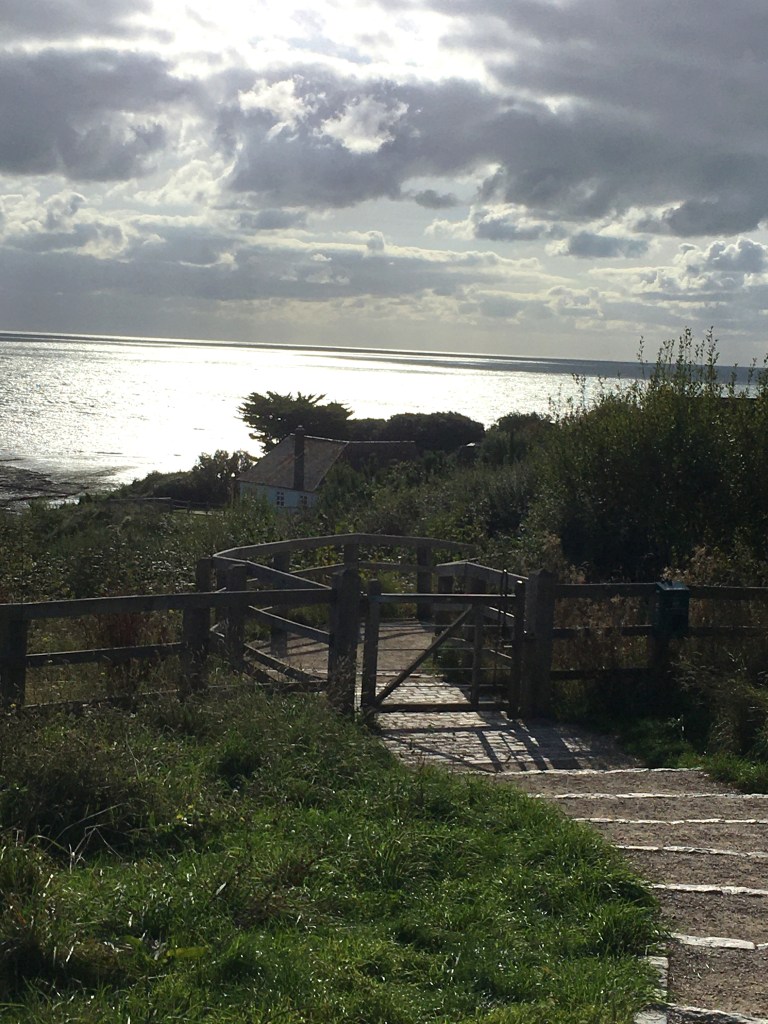
Passing time is a recurrent theme in the novel, not least due to the frequent references to Anne’s fading youth. The sense of lateness is continued during the visit to Lyme Regis. It is November, and so the holiday season is over: ‘…the rooms were shut up, the lodgers almost all gone, scarcely any family but of the residents left.’ It being November, the daylight is fast fading and the narrator tells us ‘… it was very evident they would not have more time for looking about them, before the light and warmth of the day were gone.’ (Chapter Eleven). This somewhat melancholy feel is extended through Anne’s sense of regret at what might have been regarding Captain Wentworth, and Lyme Regis becomes a place for reflection. However, the location quickly works its magic as Anne begins to enjoy herself and becomes more confident as she begins to appreciate her own intelligence. The following morning, she partakes of a ‘stroll down to the sea before breakfast’ (Chapter Eleven) in the company of Henrietta. The narrator describes how Anne glories in the delight of the sea breeze. Later that morning Anne accompanies Captain Wentworth, Louisa and Henrietta on a trip to town. It is on the way back that a significant event occurs in terms of Anne’s transformation. As they are about to descend the steps leading down to the beach they encounter a gentleman who draws back to allow them to go first. As they pass by, the gentleman looks at Anne:
… with a degree of earnest admiration which she could not be insensible of. She was looking remarkably well; her very regular, very pretty features, having the bloom and freshness of youth restored by the fine wind which had been blowing on her complexion, and by the animation of eye which it had also produced. (Chapter Twelve)
This is the first instance of Anne’s appearance being described in favourable terms. The moment becomes more significant though:
It was evident that the gentleman (completely a gentleman in manner), admired her exceedingly. Captain Wentworth looked round at her instantly in a way which showed his noticing of it. He gave her a momentary glance – a glance of brightness, which seemed to say, ‘That man is struck with you – and even I, at this moment, see something like Anne Elliot again. (Chapter Twelve)
This is an important moment. Not only has the vigour of the sea air restored Anne’s fading bloom, Captain Wentworth is witness to another man finding her attractive, which begins a shift in his own feelings.
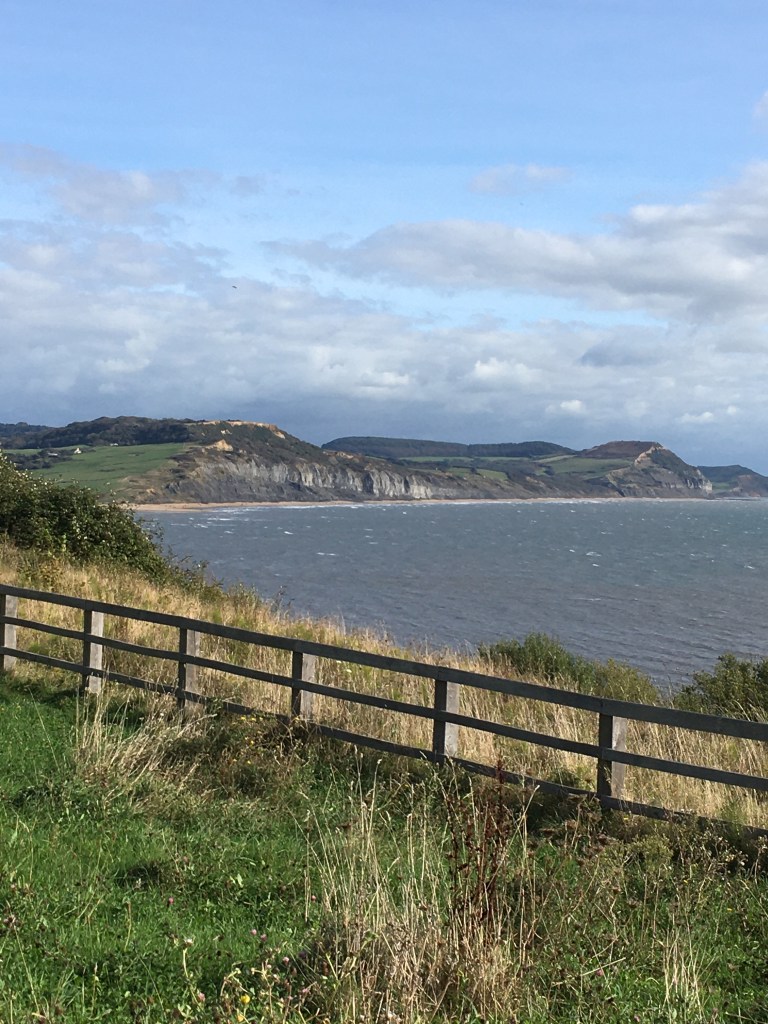
The next significant event concerns an accident at the Cobb. This is a stone constructed breakwater and jetty, some of which dates back to medieval times. It has proved to be an important structure over the years, preventing coastal erosion and securing a safe harbour for trade, and thus is of great economic importance for the town. It has been extended and repaired many times over the centuries. Earlier, the narrator has praised ‘its old wonders and new improvements, with the very beautiful line of cliffs stretching out to the east of the town,’ a description which is still recognisable today. Jane Austen’s fondness for Lyme Regis is evident through the way in which she creates a sense of the surrounding scenery.
The rather boisterous Louisa has previously enjoyed being jumped down from stiles by Captain Wentworth as ‘the sensation was delightful to her.’ Whilst the other ladies are content to use the steps from the high part of the Cobb to the lower level, Louisa again wishes to be jumped down. Wentworth is reluctant to do so, fearing the hardness of the pavement will be too jarring for her. She refuses to listen, he reluctantly agrees, and all is well. That is until she runs up the steps to be jumped down again. This time she jumps too soon and he fails to catch her, ‘she fell on the pavement on the lower Cobb, and was taken up lifeless!’ (Chapter Twelve) Her face is described as ‘like death’. Chaos ensues, her sister Henrietta faints and Wentworth is beside himself with guilt and despair. It falls to Anne to take control, providing smelling salts, supporting the fainting sister, and insisting a surgeon is sent for. As the drama continues, Anne remains a figure of calm and it becomes clear Wentworth defers to her authority and begins to appreciate, rather than resent, her presence.
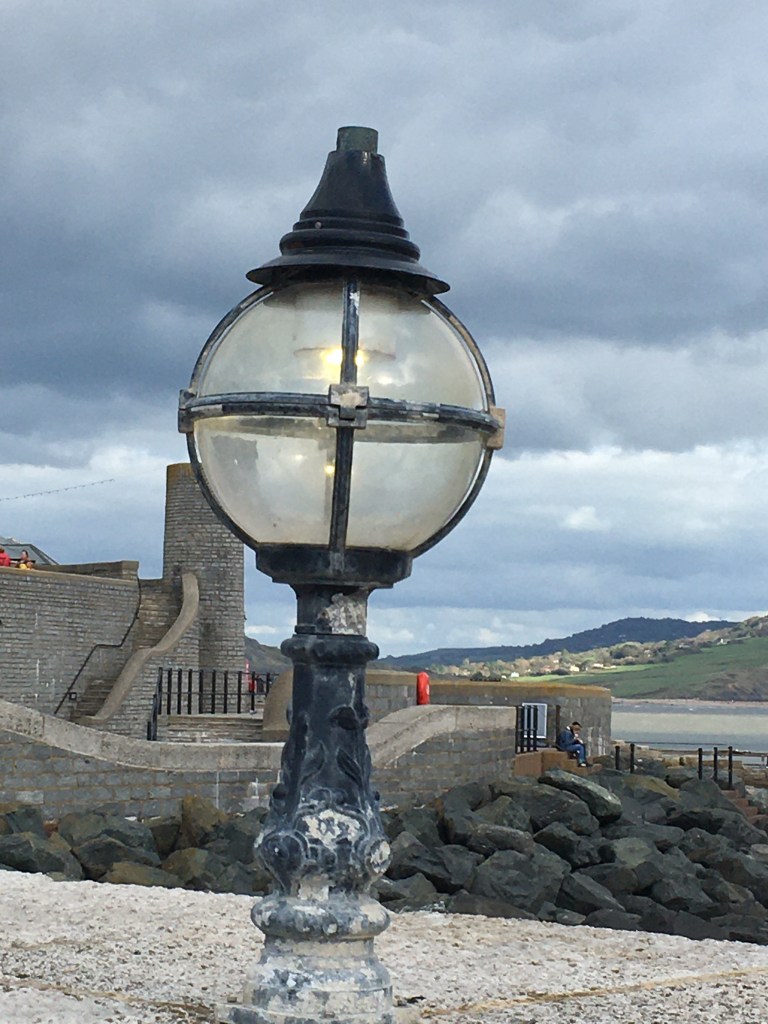
Lyme Regis functions as a place of transition. In terms of structure, it occupies a small space in the narrative, just two chapters at the end of Volume I, providing an interlude between the rural Somersetshire chapters in Volume I and the Bath chapters in Volume II. However, it provides a crucial turning point in the story of Anne Eliot. She gains a newfound confidence regarding her intellectual strengths, and experiences moments of self-realisation regarding her own actions in the broken engagement to Wentworth. Furthermore, her physical health is improved by the sea air and she regains some of her lost, all important, bloom. The narrator describes it as an ideal place ‘for sitting in unwearied contemplation’. Indeed, Austen’s love for the location clearly comes through as we are told ‘these places must be visited, and visited again, to make the worth of Lyme understood.’ (Chapter Eleven) As we leave Anne Elliot just half way through her story, you could now turn to Persuasion to see how her future unfolds.
(Photos are author’s own)


Leave a comment