Tag: Edwardian fiction

  • Edith Wharton in England

    Edith Wharton rarely returned to America after making France her home in 1907, and for a while, she considered settling in England.  According to Hermione Lee, from 1908 she spent several weeks a year in England on an almost annual basis.  For a time, she pursued the idea of buying a house by the name of Coopersale in Epping, but eventually decided against the idea due to the dilapidated state of the house and grounds, much to the disappointment of writer friend Henry James.  Nevertheless, she was a frequent visitor, along with other prominent writers including H.G. Wells and Rudyard Kipling to Lamb House, which Henry James had made his home.

    During her visits to England, Edith Wharton became a familiar presence at many stately homes.  She was introduced to the residents of some of these by Henry James, others she came to through her own acquaintances,such as the Cliveden estate, home of the Astors.  She made her first visit in 1908, and on a return visit in 1912 she introduced Henry James.  Like the Astors and Cliveden, many of these estates had connections with Wharton’s homeland.

    One of the houses, or rather the gardens, which most captivated Wharton was Hidcote Manor, close to Chipping Camden in the Cotswolds.  Edith Wharton maintained a keen interest in house and garden design and wrote about these subjects in addition to her many novels.  As early as 1897 she wrote The Decoration of Houses and in 1904 Italian Villas and their Gardens.

    Wharton became firm friends with Major Lawrence Johnston, owner of Hidcote Manor.  Johnston was also American and became a renowned horticulturalist through his dedicated garden design at Hidcote, beginning in 1907.  Both were Americans making their homes in other countries, and their friendship flourished due to their shared love of gardens.  Following her first visit in 1925, she became a regular guest and particularly admired Johnstone’s Arts and Crafts style gardens.  Inspired by Gertrude Jekyll, Johnstone designed a series of interconnected gardens or ‘external rooms’ sometimes using distinct colour themes.  Wharton herself adopted a similar style at her French home Pavillon Colombe where a narrow path connected outdoor spaces separated by hedges.

    Despite Wharton’s love of England, not many of her works were set here.  Some of her ghost stories made use of an English setting.  Biographer Hermione Lee states Wharton thought of England as a “great rich garden” with old English houses providing a perfect setting for ghost stories.  One such example is her 1910 story ‘Afterward’, a chilling tale set in a country house by the name of Stocks in Dorsetshire.

    It is interesting Wharton returned to England for the setting of her final and uncompleted novel The Buccaneers.  This was published in 1938, a year after her death, although the novel is set during the 1870s.  The first idea for the novel came to her whilst visiting Tintagel, Cornwall in the summer of 1928.  The plot of the novel takes a topic which also interested Henry James, namely the infiltration of American heiresses into the English aristocracy.  With English country estates beginning to fall into disrepair, wealthy American young women seeking marriage provided a useful solution.  Both sides benefitted with aspiring young Americans gaining a title, and declining country estates receiving a much needed injection of money.
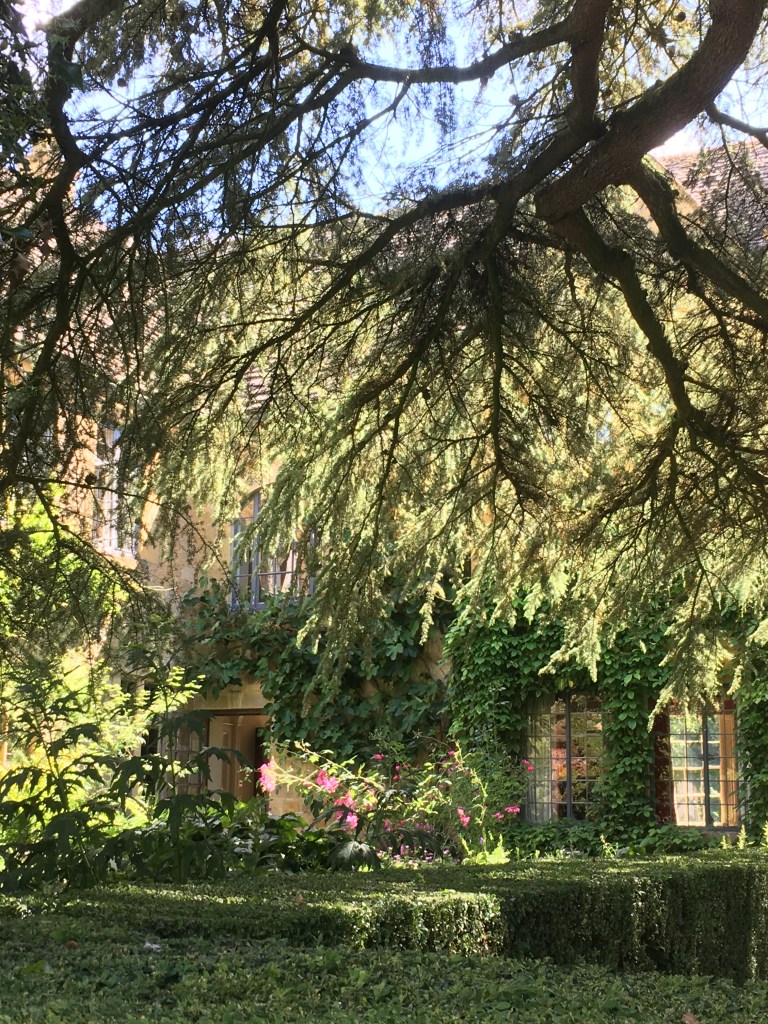
    In addition to the Cornish coast, The Buccaneers also makes use of the Cotswolds as a setting.  Shy heroine Nan St George finds herself in sympathy with the aristocratic Guy Thwaite, through their love of old houses.  This becomes apparent during her visit to his ancestral home Honourslove, which according to Hermione Lee, is based on Stanway, another of Wharton’s favourite places to visit during the 1930s.  We are told the “terrace of Honourslove had never looked more beautiful than on the following Sunday afternoon” and Nan is enamoured with the lavender borders.  She reflects on how “the bricks of the walls, the very flags of the terrace were so full of captured sunshine that in the darkest days they must keep an inner brightness” (Chapter 11).  I cannot help wondering whether Edith Wharton may also have been thinking of Hidcote. 
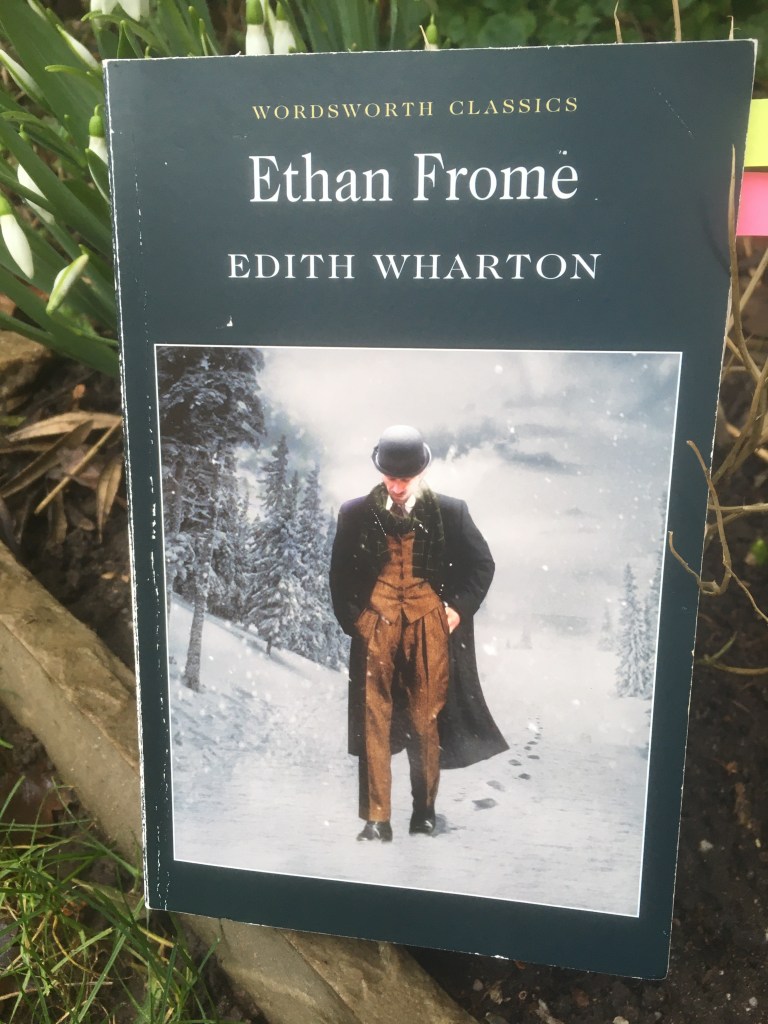
  • Ethan Frome, or ‘Sous la Neige’

    The Valley of Decision, Edith Wharton’s first published novel in 1902 was set in Eighteenth Century Italy.  At the start of their lifelong friendship, Henry James offered Wharton some constructive criticism after reading this novel, namely she would be better advised to write about what she knew.  Wharton took on board his advice as her next novel, The House of Mirth (1905) presented the trials and tribulations of Lily Bart as she attempts to navigate her way through the upper echelons of New York high society, a world which Wharton knew well.  However, in her 1911 novella Ethan Frome, Wharton takes a different direction again.  Gone are the lavish parties with women in elegant gowns posing in decorous drawing rooms.  In Ethan Frome, the high life of New York is swapped for a lonely snowbound village in western Massachusetts and the harsh living conditions experienced by so-called ordinary folk in the previous century.  I say ‘so-called’ because her novella received a certain amount of criticism for its depiction of working class characters.  Nevertheless, Ethan Frome was greatly admired by Henry James.  Wharton had also set her earlier novel The Fruit of the Tree (1907) in western Massachusetts and would return to the region again in her later novella Summer (1917).

    In an introduction written for the 1922 edition of Ethan Frome Wharton explained she wanted to present something of the ‘harsh and beautiful land’ she had experienced whilst living in the area.  She was implicitly critical of other regional writers such as Sarah Orne Jewett as she felt they idealised the locale, whereas she wanted to create a harsher feeling of ‘the outcropping granite’ of the country.  There is indeed nothing soft and fern-like in her tale of poor Ethan.

    Wharton uses a narrator to frame the story of Ethan whom he meets when he visits the town of Starkfield (note the appropriate name).  As the snow moves in, the unnamed narrator becomes trapped in the isolated small town and this is when Ethan’s story begins to unfold.  The narrator commences by telling the reader:

    I had the story, bit by bit, from various people, and as generally happens in such cases, each time it was a different story. (Prologue)

    The narrator takes shelter in Ethan’s home.  On first meeting Ethan he is struck by his appearance as he was ‘the most striking figure in Starkfield, though he was but the ruin of a man.’ (Prologue).  He looks like an old man and walks with a limp although he was only fifty-two. This was due to an accident some twenty-four years previous. 

    The introductory section functions as a frame narrative, a device often used in gothic stories.  Whilst this is not an overtly gothic tale, it certainly borrows some elements from this genre.  An air of mystery is created surrounding the history of Mr Frome by circling around the story a number of times and using repeated phrases such as ‘most of the smart ones get away.’  Just what has made him a ‘ruin of a man’?  Starkfield is a fictional town, and indeed the carefully chosen name adds to the gothic feel of the location.

    The reader is moved from the Prologue into the main body of the text and this is where the story begins to unfold.  The basic story is relatively straightforward.  A young Ethan Frome inherits the family farm from his father, a farm which was already failing and which takes all of his efforts to sustain.  When his mother becomes ill his cousin Zenobia is sent to help care for her.  On his mother’s death, Ethan’s prospects are bleak and he marries Zenobia (known as Zeena) to stave off the loneliness of winter.  He reflects had it been summer he may not have been so inclined to marry.  From the outset it is not a happy union as Zeena begins to experience one illness after another and becomes completely fixated on what she perceives as her failing health.  Thus, Ethan has replaced a querulous complaining mother for a wife with similar qualities.  Eventually, Zeena’s orphaned cousin Mattie Silver comes to live with them to help out with domestic duties.  She is young, pretty and cheerful and poor Ethan falls in love with her.

    On the surface this is a simple tale, however, it is packed full with psychological intensity.  Wharton biographer Hermione Lee suggests the novella ‘comes as a great shock’ after some of her other novels, not just because of her change of class focus but because of its silence and control.[i]  Although Wharton may more often be associated with her high society novels, she was actually a very diverse and prolific writer.  Her outpourings also included ghost stories, travel literature, war writings, as well as a work on interior design.

    Every reference to Zeena works towards establishing her awful appearance, which soon becomes clear to the reader, is a reflection of her personality.  For example:

    She sat opposite the window, and the pale light reflected from the banks of snow made her face look more than usually drawn and bloodless, sharpened the three parallel creases between ear and cheek, and drew querulous lines from her thin nose to the corners of her mouth.  Though she was but seven years her husband’s senior, and he was only twenty eight, she was already an old woman.  (Chapter Three)

    Zeena constantly complains of various aches and pains and frequently seeks cures from a variety of medications.  It was her so-called failing health which saw a double advantage in giving Mattie a home.  Although Zeena felt obligated to take in her homeless orphaned cousin, she would also provide a source of free labour, allowing Zeena to move further into her chosen role of invalid.

    The arrival of Mattie at the gloomy farmstead is like a breath of fresh air for Ethan.  Whereas the light reflected by the snow emphasized Zeena’s faults, the light from the lamp enhances Mattie’s features:

    … it drew out with some distinctness her slim young throat and the brown wrist no bigger than a child’s.  Then striking upward, it threw a lustrous fleck on her lips, edged her eyes with velvet shade, and laid a milky whiteness above the black curve of her brows.  (Chapter Four)

    The tensions in the home soon begin to rise as the warmth of the attraction between Ethan and Mattie begins to grow.  Zeena becomes ever more critical of Mattie and it is clear the situation will come to a head at some point.  The drama of emotions is tightly controlled and Wharton admitted she was inspired by both The Blithedale Romance by Nathanial Hawthorne and Emily Bronte’s Wuthering Heights with regards to the text’s emotional intensity.

    Much of the writing of Ethan Frome took place during the summer of 1910, a particularly challenging time in Wharton’s life.  Although she was enjoying success in her career, her personal life had become difficult.  Her husband Teddy had for sometime been suffering bouts of ill health and erratic behaviour.  He had previously lost a large sum of Edith’s money due to his uncontrolled actions and by the summer of 1910 he was residing in a clinic.  The doctors in Indiana diagnosed him as having ‘a psychosis’. To complicate matters, Edith was also embroiled in an affair with journalist and author William Morton Fullerton, an affair which was not destined to last.  Later the Wharton marriage would completely breakdown and following her divorce Edith settled permanently in France.

    Interestingly, the French translation of the Ethan Frome bore the title Sous la Neige (Under the Snow) which is actually rather appropriate, not just in terms of the weather, but in the emotions of the characters which seem destined to remain buried.  So, as the weather turns colder and the days grow shorter, why not immerse yourself in some of Wharton’s atmospheric writing.


    [i] Hermione Lee, Edith Wharton, London: Vintage Books, 2008, p.375

  • Man-Size in Marble: A Tale for Halloween

    Halloween is the perfect time for reading ghostly tales. This offering from Edith Nesbit is set at that spooky time of year. Here is an excerpt of my article on her short story ‘Man-Size in Marble’. The full article can be found by following the link to the Wordsworth blog.

    Halloween season, in common with Christmas, is the time of year many an avid reader will reach for a ghostly tale. Whilst sitting comfortably by the fireside hopefully the story will provide just the right amount of gentle chill to the room and a soft breeze to the back of the neck. If this description appeals, ‘Man-Size in Marble’ maybe just the tale you are looking for.

    This story fits the bill in a number of ways, it is set in the period leading up to Halloween, with the climax occurring on that fateful night. The tale is told by a male narrator who immediately alerts the reader that this will not be a happy tale. The opening line sets up an air of mystery: ‘Although every word of this tale is true, I do not expect people to believe it.’ He goes on to reveal: ‘There were three who took part in this; Laura and I and another man. The other man lives still, and can speak to the truth of the least credible part of my story.’ There are indeed some troubling implications established in the first paragraph, however, before exploring the story further, a little background is in order.

    ‘Man-Size in Marble’ was first published in Home Chimes magazine in December 1887 and came from the pen of Edith Nesbit. If that name seems familiar, it is not surprising, as she would later become famous for her highly popular novel The Railway Children (1905) and other children’s fiction including Five Children and It (1902) and The Enchanted Castle (1907). However, in addition to her successful children’s fiction, Nesbit wrote a number of chilling ghost stories for adults, in addition to poetry and other works in collaboration.

    To say Edith Nesbit led a Bohemian life would be somewhat of an understatement. When she married her husband Hubert Bland, she was already seven months pregnant. During their marriage, Bland fathered two children by Nesbit’s friend Alice Hoatson, and Nesbit raised them as her own. Both Nesbit and Bland had affairs and their home in Eltham was lively place with frequent visitors, including such well known names as H.G. Wells.

    Nesbit and her husband were politically active and were the co-founders of the Fabian Society, to which the roots of the Labour party can be attributed. Nesbit and Bland also wrote fiction together under the pseudonym Fabian Bland. If you look carefully, some of her socialist beliefs are apparent in her children’s fiction. Although a politically active woman writer, her attitudes towards the Women’s Suffrage Movement was at best ambivalent and at times directly opposed. Some of Nesbit’s attitudes and beliefs appear to have worked their way into her gothic stories too, along with her lifelong fascination for ghosts.

    To read my discussion of ‘Man-Size in Marble’ please follow the link click here


  • The Shadowy World of Edith Nesbit

    Recently, I was fortunate to have a very small involvement with some bibliography research regarding the newly published Wordsworth collection of Edith Nesbit’s ghost stories. I also wrote a blog discussing some of her ghostly tales which you can read an excerpt of below. If you would like to read the full article, just follow the link in the usual way.

    Chances are, many readers know Edith Nesbit from her creation of courageous Bobbie in the successfully adapted 1905 novel The Railway Children.  Or, possibly your first introduction was through the mysterious creature the Psammead in Five Children and It (1902), or perhaps the adventures of Jerry, Jimmy and Kathleen in The Enchanted Castle (1907).  Therefore, some may be surprised to find images such as the following, flowing from the same pen:

    … So he went upstairs, and at the door of the first bedroom he came to he struck a wax match, as he had done in the sitting rooms.  Even as he did so, he felt that he was not alone.  And he was prepared to see something but for what he saw he was not prepared.  For what he saw lay on the bed, in a white loose gown – and it was his sweetheart, and its throat was cut from ear to ear.

    This excerpt comes from Nesbit’s short story ‘The Mystery of the Semi-Detached’ included in her 1893 collection Grim Tales.  In just a few lines she moves from creating a vague sense of unease to a startling shock.  To say this is characteristic of Nesbit’s gothic writing is an oversimplification as she wrote many and varied short stories which could be categorized under the umbrella of horror.  Whilst there are distinct similarities regarding some aspects of style and thematics across her tales, there is also a rich variety and this sense of variety is exemplified by the newly published Wordsworth Edition Man-size in Marble and Other Grim Tales.

    Nesbit is not alone in being better known for other forms of writing, despite producing a significant amount of material in the horror genre.  Writers such as Charles Dickens, Elizabeth Gaskell, Edith Wharton, Henry James and E.F. Benson all had notable forays into the realms of gothic despite being more usually associated with other forms of writing.  Yet Nesbit wrote a large number of horror stories during the course of her writing career, although it is sometimes wrongly assumed this was simply something she did until her children’s stories made her famous.  Her horror works span from the late Victorian era of the 1880s up until the post First World War period, with her final story ‘The Detective’ appearing in 1920.

    Many of her stories made their first appearance in popular journals of the day such as Longman’s Magazine, Temple Bar, Windsor, and London Magazine.  The Strand Magazine, famous for its longstanding publication of Sir Arthur Conan Doyle’s Sherlock Holmes stories, also published many of Nesbit’s tales.  She collected some of her short stories together in several volumes, beginning with the previously mentioned Grim Tales and Something Wrong in 1893.  The Wordsworth Edition of her tales is unusual as it not only reproduces the Grim Tales collection in its entirety, but also includes all of her other horror stories, many of which have previously been overlooked.

    Stephen Carver’s Introduction to the collection discusses how biographies and other secondary writings about Nesbit’s work tend to focus on her children’s fiction, whilst her horror stories tend to be dismissed.  The Radio 4 programme Great Lives devoted an episode to Edith Nesbit on 22 April 2024.  She was chosen by children’s writer Katherine Rundell who praised her for continuing to inspire children’s fiction today.  Biographer Elisabeth Galvin joined the discussion and posited that Edith began writing through necessity as a young mother in order to help support the family.  At that time her husband Hubert Bland was very ill, almost dying from smallpox.  To compound matters his business collapsed when his partner absconded to Spain with all of their money.  Thus, she would sit up late into the night writing what Galvin described as ‘her hack stories for newspapers.’  Galvin is not alone in viewing Nesbit’s gothic work in this way and it is difficult to ignore the negative connotations imbedded in such a term.  The word ‘hack’ originates from Hackney Carriage, a form of transport available for hire.  Thus a ‘writer for hire’, namely someone who produces large amounts of writing quickly to earn money, may well be viewed in negative terms.  Similarly, genre fiction, for example horror and science fiction may also be dismissed as being popular, not highbrow or literary and thus unlikely to be art or to put forward important ideas.  Clearly, this is a rather traditional, and some may say outdated stance, but may well explain why Nesbit’s horror stories have attracted little critical attention.  A few of her stories have been anthologised over the years, most commonly ‘Man-size in Marble’ as well as ‘John Charrington’s Wedding’ and ‘The Ebony Frame’.

    Elisabeth Galvin’s biography of Nesbit does make mention of her horror stories, and unusually finds value in them, a position with which I agree.  Galvin suggests they originate from the mind of someone who was unhappy, and if you follow the details of her life, this may well seem true.  However, she states Nesbit should be ‘applauded for her pioneering ghost stories that were several degrees chillier than anything that had been written before.’  Nesbit does indeed develop a considerable amount of chill in her stories.  Whilst there are some similarities and recurring images, there are distinct differences too.  Sometimes there is a logical explanation for what initially appeared to be supernatural, other times the horror is unapologetically supernatural in origin.  Unusually for a lady writer of the time, many of her narrators are male, and not all of them are heroic.  The Wordsworth collection nicely exemplifies the range of her horror writing.  A few of the stories are quite humorous and playful, offering a little light relief from the darkly gothic tales, not all of which have happy endings.  Other stories defy expectations such as ‘The Haunted House’ first published in The Strand Magazine in 1913.  As its name suggests, this starts out as a haunted house tale, whereby the male protagonist answers an advertisement to investigate strange phenomena and arrives ‘in front of a white house with bare, gaunt windows.’  However, this is a story which shifts the ground beneath the reader as the narrative progresses.  How?  Well, you will need to read it to find out.

    To read the rest of this article, please follow the link to Wordsworth Editions Click here

    Leave a Reply